The New Hampshire Legislature, Why it’s Important, and How You Can Get Involved
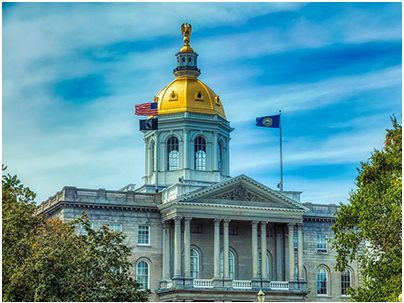
In December I attended an Advocacy conference focused around the NH state legislature and how it works. The New Hampshire legislature is one of the most unique in the country given that it is the 3rd largest English speaking governing body in the world. There are 400 state representatives and 24 senators. This along with the very low pay creates an interesting dynamic. Legislatures make only $100 per year and this does not include their nametags or special license plates. They do however get paid for gas which helps to produce some inequity given varying distances. However given the low pay many legislators are either independently wealthy or retired, this is obviously in contrast with the state population. The New Hampshire legislature is broadly a very traditional organization which often comes in contention with the way in which our modern world works. This is a body that was designed to function in a time with many less people and much less complex issues, it is now expected to function in a much more complex and polarized world.
Now, you may be wondering how the state government applies to you. Well it’s simple; they are directly responsible for things such as the phone bans, and the state budgets. Representatives do not have anyone who works for them, they do not have legislative assistants who work the phones and research the bills. This year alone over 1140 bills have been proposed. This is a lot, there is no way for representatives to research all of them, they instead rely on their constituents, lobbyists, and party leadership. If you call your legislators it is most likely them who will pick up, the majority of the time the listed phone number is their personal phone. This is an unparalleled level of access and what the New Hampshire founders aimed for, currently each representative averages 3500 constituents. The theory is that house members are able to hear from their constituents directly and vote based on what they want or advocate for. However the reality is that members are just at the will of their parties for guidance on how to vote given that it is not possible for a single person to read, understand, and develop an opinion on all 1140 bills.
January is the time when bills are introduced so you will see a lot about some potentially outlandish things being proposed, however it is important to remember that given the thin majority along with the pure volume of bills it is important you have your voice heard if there are things you care about. The legislative session runs January to June and there will be schedules released weekly with the dates and times for public hearings for specific bills. At these hearings members of the public, including those under 18 and from out of state can come and speak on a bill if it will affect them in any way. These hearings happen both on the house and senate sides so they will happen twice for every bill. If a bill passes the house and senate it goes to the governor’s desk where she has the opportunity to sign it into law or veto it, however within New Hampshire she also has the option to do nothing. She can let it “sit on her desk” for 5 days after which it will become law. This gives the governor additional leeway to avoid direct involvement in bills if they are politically inexpedient. Additionally for all vetoed bills the members have a day at the end of the session where they can vote on all of them at once and if a bill passes with a ⅔ majority it can become law without the approval of the governor. This system of checks and balances is what mirrors our federal government and is what allows democracy to continue functioning.
The bottom line is that if you have an issue you care about there are many ways you can have your voice heard in state politics.
You can:
- Attend a public hearing
- Call or email your congressperson
- Additionally you can submit digital testimony on the general court website
For those interested our State Representatives are:
- Loren E Foxx (D)
- Ted Gorski (R)
- Linda R Gould (R)
- Brian H Labrie (R)
- Kristin Noble (R)
- Catherine A Rombeau (D)
- John Schneller (R)
Our State Senator is Senator Ricciardi (R).
Works Cited
New Futures. “New Futures | about the NH Legislature.” New-Futures.org, new-futures.org/about-the-nh-legislature.
New Hampshire Government. “History of the State House.” NH.gov, 2025, www.nh.gov/almanac/history/history-state-house.
The General Court of New Hampshire. “New Hampshire Legislative Service Requests (LSR’s).” Nh.gov, 2026, gc.nh.gov/lsr_search/LSR_Results.aspx. Accessed 28 Jan. 2026.
—. “The New Hampshire House of Representatives.” Nh.gov, 2015, gc.nh.gov/house/members/.