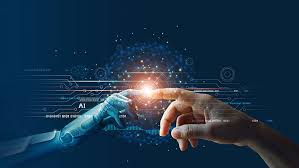
Over the past few years, artificial intelligence has developed significantly, to the point where sometimes it can be hard to tell the difference between what’s real and what’s AI. This development of AI has been specifically affecting the art industry, and artists are concerned that their jobs are in jeopardy with its rise. Whether an introduction of artificial intelligence into art will be helpful or harmful is being widely debated.
One big concern artists are having with artificial intelligence is that it is “trained” using the work of real artists and often will use artists’ work as inspiration without consent. This has led several individuals to take action against it, including Holly Herndon and Matt Dryhurst, who founded Spawning AI (Baxter). The goal of Spawning AI is to find out if artists’ work is being used to “train” AI and if it is, stop it. Ben Zhao and Heather Zhen also created GLAZE, another program that aims to help artists avoid their work being used by AI (Wakelee-Lynch). It disrupts AI’s algorithm when an artist’s work is entered into the prompt, preventing it from being copied. This is all a concern in the first place because artists see AI results based on their work as plagiarism. AI’s codes evolve upon exposure, meaning that seeing the work of an artist could influence an AI to create work more resembling that artist’s. In 2024, The New York Times sued OpenAI for its use of their content to train AI without consent, a real representation of this concern coming into play (Waikar).
However, some argue that this shouldn’t be a concern due to the fact that humans themselves build upon other artists’ work and use it for inspiration. As humans, they argue we’ve been taking inspiration from the works of other artists for ages, so it shouldn’t be an issue when artificial intelligence does the same thing. In addition, things called Creative Adversarial Networks are designed to oppose the training patterns given to AI in order for it to create something new (Baxter). This means that even if AI’s codes are altered by its exposure to the work of artists, these networks will hopefully prevent it from directly plagiarizing off of that work. There are even examples of AI that has not been trained by the work of artists. For example, Ai-Da is a humanoid robot artist and newly created images are fed into cameras in her eyes in order for her to create (Baxter). She creates pieces of art without plagiarizing off of artists’ work.
Another concern of artists’ is that artificial intelligence will start to put traditional artists out of jobs and take away their business. Fears that people will start to prefer AI art over traditional art stem from the fact that AI creates much faster than a human artist would. Additionally, the amount of time and effort put into a piece usually defines how much an artist charges for it, so since AI doesn’t spend hours on pieces, its creations might be sold for less than traditional art and therefore be more appealing in its affordability. A lot of jobs in the art industry are digital, and another concern is that employers might switch to using AI due to the fact that using it would cost them much less than paying traditional artists (Clark and Ortmeyer). A study by Smauel Goldberg and H. Tai Lam further encouraged artists’ fear (Waikar). In the study, a platform that was used to supply millions of images to consumers introduced AI generated media. After this introduction, AI sales on the platform skyrocketed while human sales plummeted. There was a 78% increase in overall images on the platform, and a 23% decrease in non-AI art. The results of this study show that given the opportunity, many people would choose AI art over traditional art.
However, some believe that the recent rise of artificial intelligence in the art industry will bring people’s attention to all the effort that traditional artists put into the work and cause them to be more appreciative of traditional art (Dimicali). Others argue that AI can become its own medium without interfering with traditional art. When photography first came to be, it was also seen as a threat to artists and viewed negatively, but it has now evolved into its own medium (Baxter). People think that AI will follow this same path. In addition, some argue that AI needs to be considered because in the past, other controversial things have been considered art. For example, a man bought a urinal, signed it, and attempted to sell it as a piece of art, which stirred up talk about what can be considered art (Baxter).
Another issue that has been brought up with AI art is that it could take away the meaning of art and dilute why art originally existed. Art is seen as something that is unique to humans because of the emotion behind it…so can it be art if it’s created by something without feelings? Artificial intelligence can’t put emotion behind art like a human can. Art is a method of expression, and is thought to be about the process of creating more than the final result (Dimacali). But AI doesn’t have that same process, and therefore takes away a lot of the purpose of making art. AI art isn’t personal like traditional art, it uses data and codes to create something. This makes people wonder if it can really be considered art. Plus, AI art has already started to take the spirit out of artists. Artists have stopped promoting their art on social media as much, and many young artists are questioning whether to continue with art due to the fact that soon the career they may have wanted to pursue could be taken over by artificial intelligence (Wakelee-Lynch).
In response to this concern, people say that AI art serves as a reflection of what is going on in society, just like all art has in the past. Marcus du Sautoy, an author and musician, claims that artificial intelligence will kickstart creativity in humans and that AI art is the start of an “artistic metamorphosis” (Baxter). A lot of people like du Sautoy agree that AI art is a positive development and will help artists to get inspired.
There are many different thoughts and opinions on what the recent development of artificial intelligence should mean for artists, and whether it is going to help or hurt them in the long run. These are just a few reasons why artists think of AI art as a threat, as well as what people have said as response to these concerns. Over time as technology inevitably develops, it will become clear what purpose AI will serve in the art industry and what effect it will have on artists.