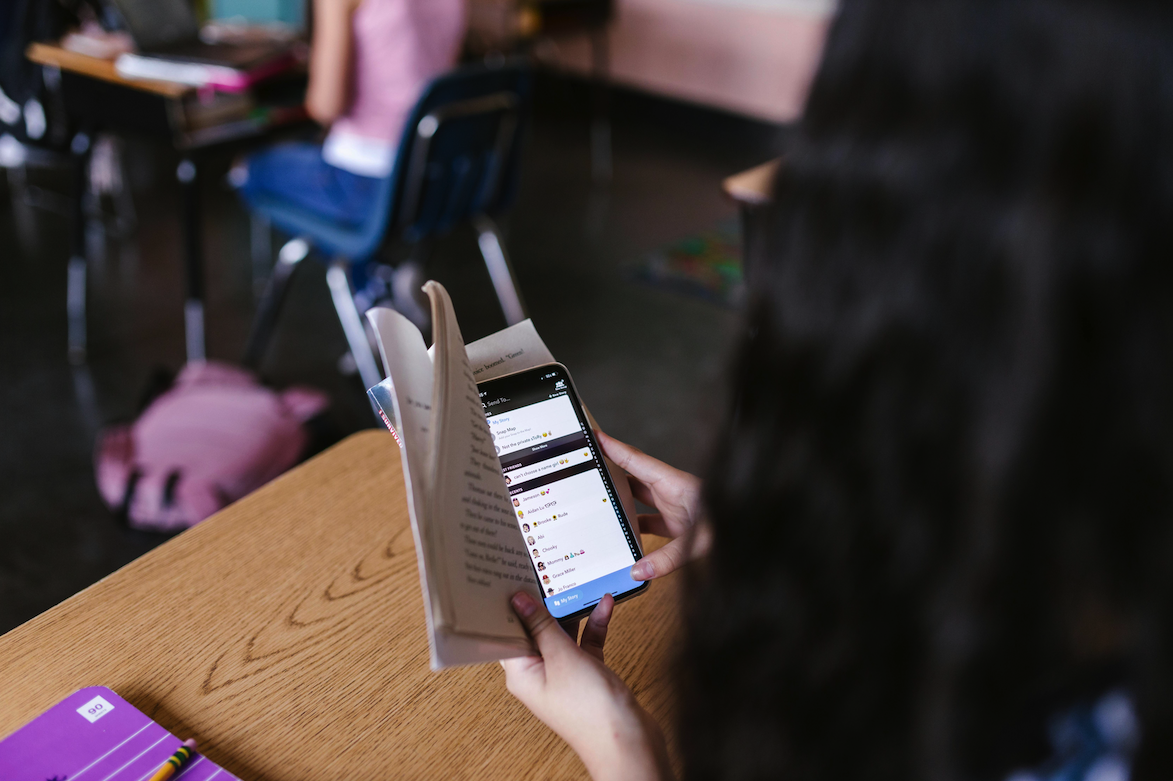
I may just be one of the few students at my school to support the newly minted bell-to-bell school cellphone policy, but I am confident that it will deliver better outcomes for teachers and students alike. If it requires me being a standalone voice, let it be so, but the truth is that limiting cellphone interactions during the school day benefits every single one of us, from students, to teachers and even parents. By now, at least two dozen states have passed some form of legislation restricting access to devices during the typical school day, and for a good reason. Studies repeatedly show that schools with similar policies have higher teacher satisfaction rates, less disrupted classes, and higher academic scores. A recent study from the Annenberg Institute at Brown University found that academic scores improved sizably for Florida students, particularly for after a full academic year of the statewide bell-to-bell policy. Additionally, unexcused absences were significantly reduced for middle and high school students over the two year testing period in the Sunshine State. The evidence is substantial – less cellphone interaction for students of all ages fosters a wholesome classroom centered around concrete education and teacher-student interaction. Clement cellphone policies have simply proven insufficient over the past few years, and the new law seeks to change that. Due to a personal conviction, I have chosen to opt out from owning a phone. I credit this for allowing me to view a more nuanced view of the entire case. Prior to the bell-to-bell cellphone policy, I have personally witnessed students accessing phones at my school during classes, despite the district mandating all phones be put away in a designated area. But what I am even more grateful for, is that limiting cellphone usage among students truly restores humanly social interactions. And by being social, I do not mean playing games on your phone while your friend does the same, but actually talking, laughing and interacting with each other. In my opinion, this wide-reaching policy is long overdue. Academics are one thing, but so is being conscious of those around you. From a personal standpoint, viewing student life dependent on phones and the internet for pleasure has led me to being somewhat concerned about the future of our society. The new cellphone policy has rapidly undone much of that, partly restoring a social life not dependent on electronic and communication devices, but the person in front of you.
In early November, Governor Kelly Ayotte visited our high school to talk to some some select students, as well as staff and the administration. I did not have the pleasure to talk with the Governor, but I applaud her for taking the time to talk with those directly impacted by the law. However, I suspect that the reason behind this recent school discussion initiative is concern over whether the law is being implemented, and more so how warm the reception is. From what I see, students are not touting the policy but they are not complaining about it on a day-to-day basis. The challenge with the law centers around enforcement, which is taken into account very leniently by students and teachers alike. Since the new law was made official, I have seen students using cellular devices on various occasions behind textbooks and under desks. This is not happening once, but many, many, many times every single day. Maximum punishments typically result in a phone laying on the desk for the remainder of a class, but nothing more serious or consequential. If our state government is truly determined to restore academic strength and a traditional classroom environment, such breaches of the statewide cellphone policy should be addressed with more serious punishments by the state itself, not just separate districts. It should be a priority to enforce the law, thus delivering the same beneficial outcomes we have seen in other states, such as Florida. We should not allow a law with great potential to simply be ignored on behalf of partisan concerns. I urge the Governor and her council, as well as lawmakers , to continue to push and enforce the cellphone ban in our state’s schools. Throughout our history, we have learned to recognize that what seems wrong may turn out right. Students like me might not find the law favorable today, but sometime in our future we will thank those in Concord for prioritizing true education over petty distractions.